At least 12 years old
PADI (Junior) Open Water Diver or higher
Three night dives
PADI Night Diver Course
PADI video: PADI Scuba Diving Lessons: PADI Night Diver Course
Who Should Try This Experience?
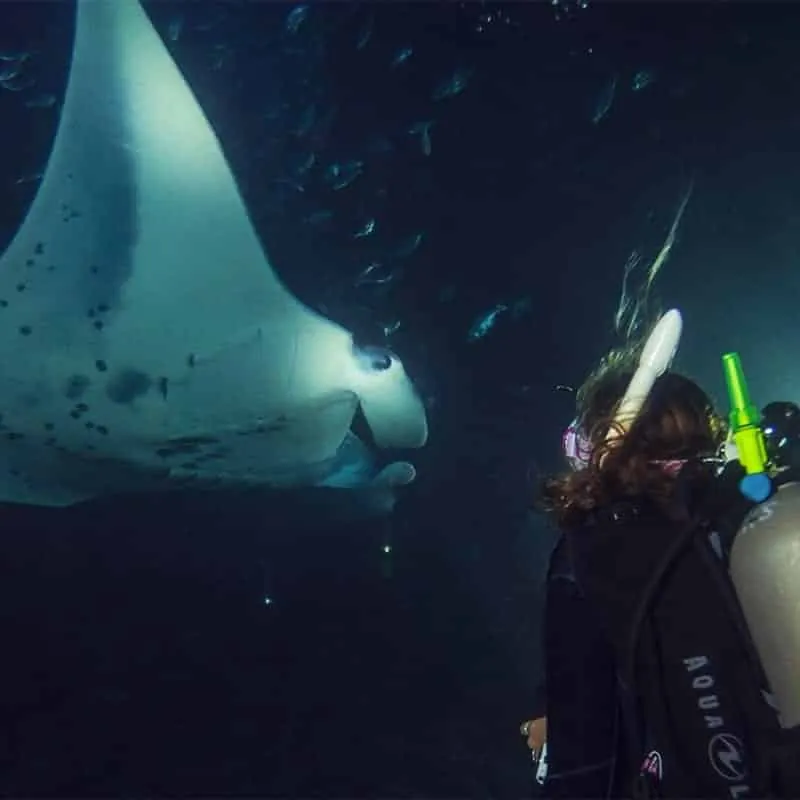
The thought of dipping below the surface at night seems mysterious, yet so alluring. Although you’ve been scuba diving at a site many times before, at night you drop into a whole new world and watch it come to life under the glow of your dive light. The scene changes as day creatures retire and nocturnal organisms emerge. If you’ve wondered what happens underwater after the sun goes down, sign up for the PADI Night Diver Specialty course. PADI (Junior) Open Water Divers or higher, who are at least 12 years old, can enroll in the Night Diver specialty course.
What Will You Learn?
Scuba diving at night teaches you to focus on what you can see in your light’s beam, on controlling your buoyancy by feel, on staying with your buddy and on paying attention to details you may overlook during the day. During three night dives, you’ll practice:
- Light handling and communication techniques.
- Entering, exiting and navigating in the dark.
- Identifying how plants and animals differ or change behavior at night.
You may be able to get college credit for the Night Diver course – ask your instructor. Also, the first dive of this PADI Specialty Diver course may credit as an Adventure Dive toward your Advanced Open Water Diver certification – ask your instructor about earning credit.
How Can You Start Learning Now?
Visit A-1 Scuba Diving to enroll in the course and get a PADI Night Diver Crew-Pak that includes a manual and video. By studying before class, you’ll be better prepared for the thrill of exploring the underwater world at night.
What Scuba Gear Will You Use?
Along with your basic scuba equipment, you’ll need a primary dive light and want to have a backup light, too. Your PADI Instructor or local dive center staff may suggest other equipment options, such as wearing more exposure protection to stay comfortable after dark.
Next Step
Breathing underwater for the first time is something you’ll never forget, so don’t wait.
- Sign up for Open Water Diver Online and start learning right away.
- Enroll in a PADI Open Water Diver course at A-1 Scuba Diving And Snorkeling Adventures.
- Try scuba diving with the Discover Scuba Diving program.
- Download a Medical Statement and Questionnaire (pdf).
- Browse the scuba certification FAQs (Frequently Asked Questions).